
Rees Garmann, Ph.D.
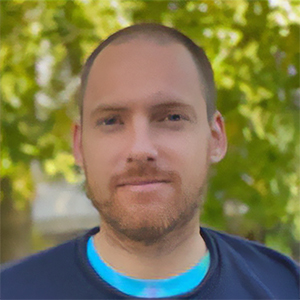
Pronouns: Rees
Associate Professor | Member of the Viral Information Institute at SDSU
Department of Chemistry and Biochemistry
Biochemistry, Physical Chemistry, Biophysics, and Viromics
College of Sciences
SDSU
Primary Email: [email protected]
Phone/Fax
Primary Phone: 42422
Building/Location
Chemical Sciences Laboratory - 334
5500 Campanile Dr
San Diego,
CA
92182
Mail Code: 1030
Website Links
Bio
Our research group studies how viruses — the baddest parasites on the planet — use molecular interactions to infect their hosts, replicate and evolve. Our approach is different from that of most other virology groups in that we often work with viruses outside of the host cell, where we can use physical chemistry techniques to zoom in on the virus particles and make very sensitive measurements of their essential properties. We take viruses apart, separate their protein and nucleic acid subunits, then put them back together. We measure the structure and dynamics of the subunits in isolation, and we also measure collective properties that emerge when many subunits interact. We team up with theorists and computational chemists to turn our measurements into quantitative models that help us understand how viruses perform complex biological functions, such as assembling, uncoating and regulating gene expression. In addition to teaching us about how viruses work, our results can inspire new ways of repurposing viruses to do useful things, such as building nanoscale materials or delivering therapeutic cargos to cells. And most importantly, our results can also inform new ways to block the spread of harmful viruses that cause disease. Because our approach borrows from many fields of basic and applied science — including molecular biology, chemistry, physics, and nanoscience — students in the group will necessarily be exposed to a broad range of experimental and theoretical techniques. These techniques include traditional molecular biology, such as cloning, protein expression, and nucleic acid synthesis; biophysical techniques, such as electrophoresis, sedimentation, and spectroscopy; structural biology methods, such as electron microscopy and RNA structure prediction; methods from nanoscience, including surface chemistry and nanoparticle functionalization; methods from DNA nanotechnology, such as DNA origami and strand exchange reactions; and nanoscale optical imaging techniques, in particular interferometric scattering microscopy. In addition, when established techniques fail, we're not afraid to invent new techniques ourselves.
Areas of Specialization
Physical Chemistry, Biochemistry, Biophysics, Viromics, Molecular Biology, Cloning, Protein Expression, Nucleic Acid Synthesis, Electrophoresis, Sedimentation, Spectroscopy, Electron Microscopy, Nanoscience, Surface Chemistry, Nanoparticle Functionalization, DNA Nanotechnology, Interferometric Scattering Microscopy
Research
Research Lab
Research Focus
