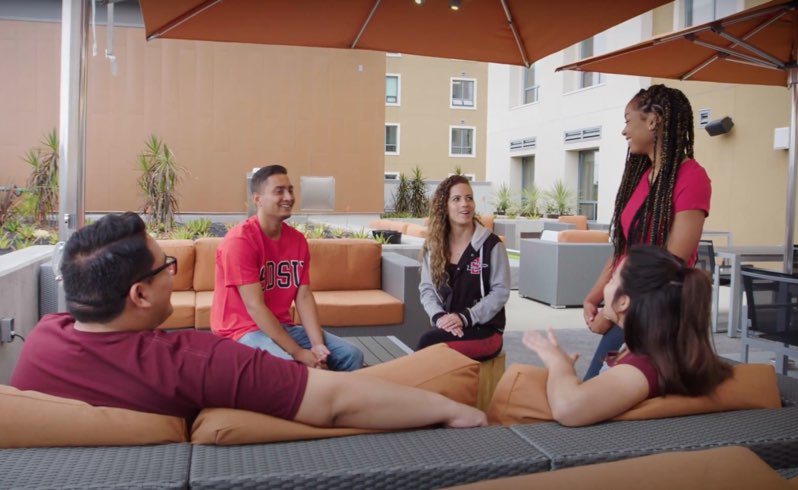
More than 13,600 San Diego State University degree candidates have the opportunity to participate in the university’s 2026 commencement weekend. Gregory T. Lucier will receive the degree at the College of Sciences commencement ceremony.
Cesar Daniel Edeza, Isaac Torres and Melissa Sicairos Bobadilla took full advantage of a program geared to transfer students pursuing STEM degrees.
College of Sciences (COS)

SDSU's top 10 degrees among 2026 graduates

SDSU to award honorary doctorate to life sciences executive

Class of '26: Three biology graduates find pathways to their dreams
SDSU / UC Davis Ecology Joint Doctoral Program
Students will be provided with an environment of excellence in ecology research, teaching, and mentoring. The advantages of this joint program are that students benefit from both SDSU and UC Davis advisors and mentors as well as having access to nearly all major biomes of California. Examples of specialized electives include courses such as theoretical ecology, human ecology, and physical-chemical ecology. Students spend their first year at SDSU with their advisor for preparation of a thesis proposal. The student then moves to UC Davis for further course work and preparation for the Qualifying Examination.
Loading data...
Major Areas of Study
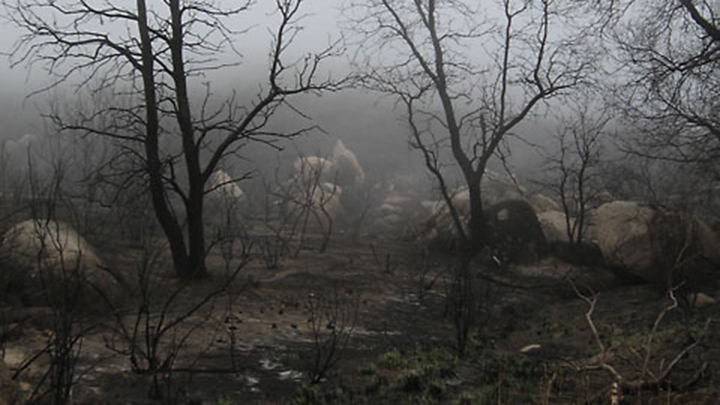
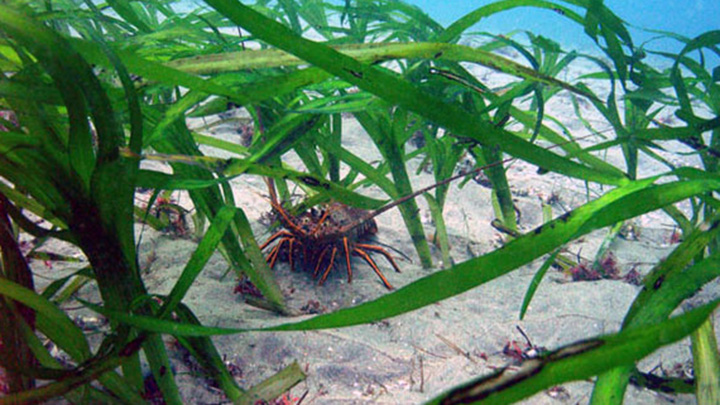
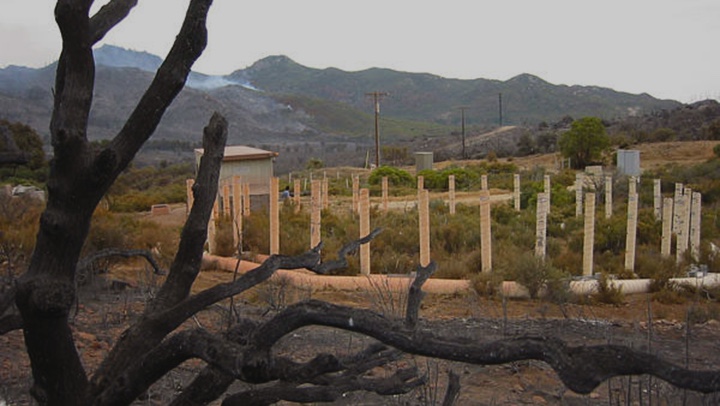
Dissertations from our Doctoral Students


Research Excellence
Our doctoral students regularly publish in prestigious journals. Here are some of their recent publications:
-
Schmidt, E., Milles, H., Kennedy, L., Donelson, J. “Interspecies Differences in Lactate Dehydrogenase and Citrate Synthase Activity Among Damselfish and Cardinalfish.” (In review) Available at SSRN: https://ssrn.com/abstract=4870192 or http://dx.doi.org/10.2139/ssrn.4870192
-
Kramer, C. J., Boudreau, M. R., Powers, R., VerCauteren, K. C., Miller, R. S., & Brook, R. K. (2024). Potential landscape connectivity for invasive wild pigs (Sus scrofa) across the northern prairies of North America. Biological Invasions, 1-14.
-
Laurin, S., Sorensen, C., McCord, S., and Milles, H. (2023) “Community Conservation Works! A Success Story in Reforesting Australia’s Wet Tropics,” The Synapse: Intercollegiate science magazine: Vol. 38: Iss. 1, Article 6. Available at:
-
Kramer, C. J., Boudreau, M. R., Miller, R. S., Powers, R., VerCauteren, K. C., & Brook, R. K. (2022). Summer habitat use and movements of invasive wild pigs (Sus scrofa) in Canadian agro-ecosystems. Canadian Journal of Zoology, 100(8), 494-506.
-
Kramer, C. J. (2021). Understanding resource selection, resource use, and landscape connectivity for invasive wild pigs (Sus scrofa) in the prairies: Implications for management (Doctoral dissertation, University of Saskatchewan).